

There is no more anxiety provoking sentence than how do I find my purpose? I have heard this question leveled at me time after time as I’ve given talks about my first book Taking Stock. In it, I suggested that we should put purpose, identity, and connections first, and then build a financial life around them. But how do we this if we can’t even begin to figure out where to start?
Have you found yourself in this uncomfortable situation?
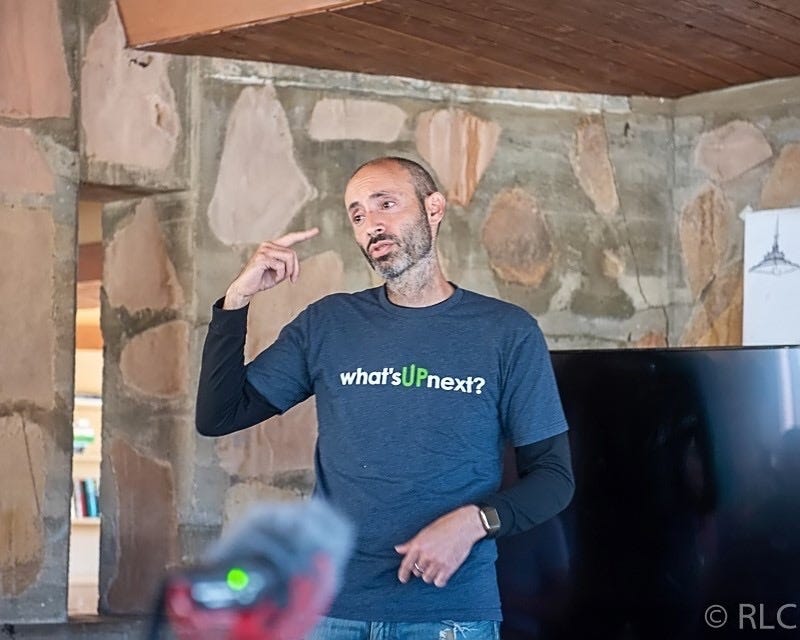
If you have, you are not alone. The purpose anxiety I have talked about in previous posts is not only real, but exceedingly prevalent. Undoubtedly, one of the biggest mistakes is to think that purpose is something that we find as opposed to create. While this idea might seem foreign at first, if you look closely at the happiest people around you, you will see that they have done exactly that.
My friend Joe Saul-Sehy is a great example. Anyone who knows him well knows that podcasting is his absolute passion. It is clearly a big part of his purpose in life. But if you think he just stumbled into it, you would be sadly mistaken. His award winning podcast, The Stacking Benjamins Show, is the end product of years of hard work.
Joe started as a financial planner who began doing media and radio for his company. After selling his financial planning practice, he originally thought he was going to be a teacher. Then he thought he would be a blogger. His move to podcasting came only as a distant third choice. And then, he had to pivot several times to have the highly successful show that he cohosts today.
And if you think Joe is now sitting back and basking in the glory, you would be sadly mistaken. He continues to be one of the most innovative guys I know, continually assessing, refining, and building on what he has already created.
Is every day a blast? Of course not. But one look at Joe (and the show) and you realize how important it is to him, and how much of an impact it makes on people’s lives. Joe didn’t stumble into his purpose, he built it.
If you want to live a fulfilling life of purpose, you will have to do the same.
Now, there is a small catch. While creating a sense of purpose is your best bet, you do have to decide (or even find) something to anchor that sense of purpose on. The small beckonings, or inklings that call us to a life of purpose sometimes hit us over the head. It did for me the first time I stepped on a stage to give a talk in front of one of my elementary school classes. I knew immediately that I wanted to build public speaking into my life.
More commonly, however, we need to intentionally search for these purpose anchors by turning an eye inward. Every one of us can do this.
We’ll discuss how in the next post.
Did you catch this week’s episode of Earn & Invest (Click to listen)?

Comments from Facebook:
Are Meaning and Purpose the Same Thing?
I think the first step is recognizing that the Hero's Journey is not the only story worth pursuing, that you will not devolve into some kind of fatalistic loss of agency, purpose or meaning if you are not pursuing that, and that it probably is not the best personal narrative for cultivating a variety of meaningful relationships and experiences.
There are many other useful narratives to choose, which include but are not limited to the Starfish Thrower, the Mexican Fisherman, the Curious Child, the Third Little Pig (and others) that can result in more meaningful and deep relationships. The place to look for these stories is often in good literature or the plots of movies that are not Hero's Journey stories. Something like "The Razor's Edge" by Somerset Maugham comes to mind.
No. Meaning is derived from purpose. Meaning is probably more so what the end goal is seeking. Purpose is how you fulfill that meaning.