


I’ve spent a lot of time in the personal finance world. Reading blogs. Listening to podcasts. Watching YouTube videos. Going down rabbit holes I probably didn’t need to go down.
And I kept coming back to the same three questions. The big ones. The ones that seem like they should have clear answers.
So I did what any of us would do—I looked for the experts.
I read the research. I followed the thought leaders. I tried to piece together something definitive. And here’s what I found:
They all disagree.
Not a little. Completely.
At first, this was frustrating. It felt like I just hadn’t found the right answer yet. Like if I read one more paper or listened to one more episode, everything would finally click into place.
But eventually, something else became clear. The problem wasn’t that I hadn’t found the answer.
It’s that there isn’t one.
So instead of pretending there’s certainty where there isn’t, I started forming opinions. Not perfect ones. Not universally correct ones. Just grounded, practical ways of thinking about things that matter.
Here are three of those questions—and what I’ve come to believe.
1. What’s a “Safe” Withdrawal Rate?
If you’ve spent any time in the financial independence space, you’ve heard this debate.
Should you withdraw 3%? 4%? 4.5%? 5%?
You can find smart people arguing every side of it. People like Michael Kitces, Wade Pfau, and Bill Bengen have all made compelling cases, backed by data, historical analysis, and thoughtful reasoning.
And yet, they land in different places.
Which tells you something important.
They’re all trying to predict a future that none of us can see.
Safe withdrawal rates depend on sequence of returns, inflation, market behavior, variables that are unknowable in advance. So instead of a clear answer, we get a range.
Here’s where I’ve landed.
I think most people can safely aim for something like 4% to 4.5%.
Not because it’s perfect, but because life isn’t static.
Most people don’t blindly withdraw the same inflation-adjusted amount every year without adjusting. They pivot. They spend less in some years. They naturally become more conservative when markets drop.
And then there’s the part we rarely talk about: many people end up earning something in retirement. A side project. Consulting. Unexpected income. Even small amounts can change the equation significantly.
So we build these ultra-conservative models on top of already conservative behavior.
Which means we often overshoot safety.
2. When Should You Take Social Security?
This one might be even more contentious.
Take it at 62? Wait until 70? Split the difference?
You’ll find strong opinions everywhere. Some argue you should take it early and invest the money. Others insist you should delay as long as possible to maximize your benefit.
But when you zoom out, something interesting happens.
Social Security is designed to be actuarially neutral. In other words, whether you take it early or late, you’re generally going to end up with a similar total…assuming an average lifespan.
Of course, the big variable is how long you live.
And none of us know that.
So we build elaborate strategies around a variable we can’t predict.
Here’s my take.
For most people, it doesn’t matter nearly as much as we think.
If you need the money at 62, take it. If you prefer the security of a larger payment later, wait. If you’re married, maybe one person takes it early and the other delays.
But beyond that?
I wouldn’t lose sleep over optimizing it.
This is one of those decisions that feels high-stakes, but probably isn’t—at least not in the way we imagine.
3. Should You Do Roth Conversions?
This one might be the most confusing of all. Spend any time in the financial space and you’ll hear wildly different advice. Some people say convert everything as quickly as possible. Max out your tax brackets. Get money into Roth accounts now while you can.
Others say the opposite. Don’t convert anything. Defer taxes as long as possible and deal with it later. And just like the other questions, both sides have compelling arguments.
Which is another way of saying…we don’t know what future tax rates will be.
So we’re trying to optimize a decision based on information that doesn’t exist yet.
Here’s how I think about it.
If you’re in a naturally low-income phase—Coast FI, Barista FI, early retirement with minimal withdrawals—then Roth conversions probably make a lot of sense. You’re in a low tax bracket, so you can convert strategically without paying much.
But for everyone else?
I tend to lean toward waiting.
Deferring taxes has always been a powerful strategy. And historically, systems tend to evolve in ways that don’t punish people who defer. If anything, they often create new opportunities.
Could that change? Of course.
But again, we’re making decisions under uncertainty.
And when in doubt, simplicity tends to win.
So What Do We Do With All This?
If you’re looking for certainty, this probably feels unsatisfying.
Three big questions. No definitive answers.
But I think there’s something quietly reassuring in that. Because if there’s no perfect answer, then there’s also no single way to mess this up.
If you’re even asking these questions and thinking about withdrawal rates, Social Security timing, tax strategy, then you’re already ahead of the curve. You’ve saved. You’ve planned. You’ve been intentional.
And that matters more than whether you choose 4% or 4.5%.
We like to believe that somewhere out there, there’s a perfectly optimized version of our financial life. A set of decisions that, if followed exactly, will guarantee success. But real life doesn’t work that way. It’s messier. More flexible. More forgiving.
You adjust. You respond. You figure things out as you go.
And most of the time, that’s enough.
So if you’re stuck trying to find the “right” answer to these questions, maybe the better move is this:
Make a thoughtful decision.
Stay flexible.
And trust that you’ll adapt if things change.
Because you probably will.
And you probably already have.
Did you catch Monday’s Episode?

The Purpose Code is Now Available!

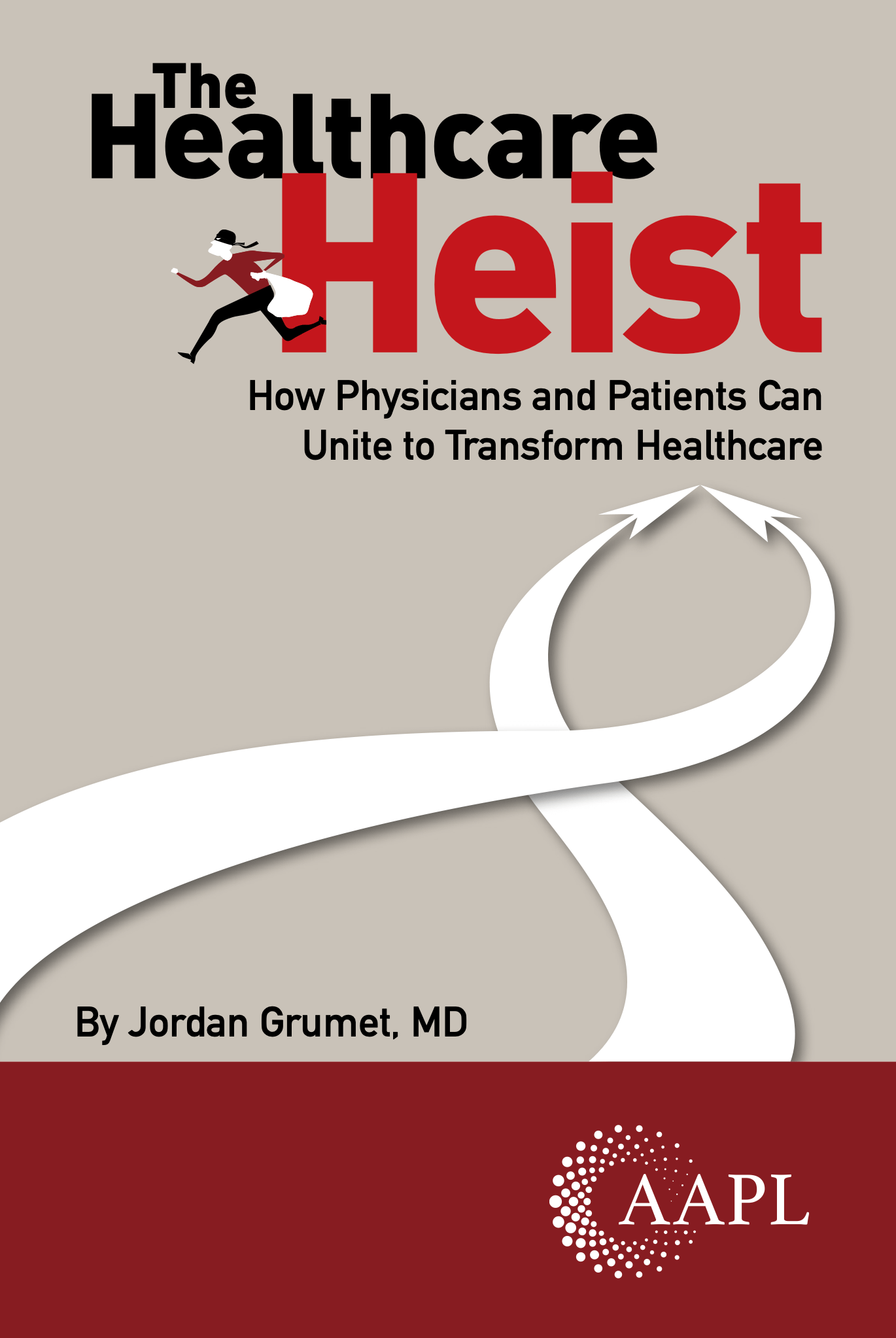
Coming soon! I am happy to announce that I have a new book coming out soon about our healthcare system. Stay tuned!
Amateurs speak with certainty. Professionals speak with nuance.