


No one in the financial independence community likes to say this out loud, but the fear driving so much of our behavior is simple: one day we’re going to run out of money.
We’ll follow the rules. Save aggressively. Invest wisely. Retire early. And then something will go wrong. A bad sequence of returns. A market crash at the wrong moment. Living longer than expected. Suddenly the spreadsheets fail, the safe withdrawal rate proves unsafe, and the plan collapses.
This quiet anxiety drives a surprising amount of behavior in the financial independence world. It fuels endless debates about whether the safe withdrawal rate should be 3% or 4%. It drives One More Year Syndrome, where people who are already financially secure keep working because they’re afraid to step away. It even feeds hustle culture, side businesses, and extra income streams pursued long after they’re necessary.
The result is a community full of people who have accumulated meaningful wealth but still feel financially fragile.
But I’m going to tell you something that might sound radical.
You are probably not going to run out of money.
Not because markets are perfectly predictable. Not because retirement calculators are flawless. But because when you look at how real people actually live, age, and spend their money, the nightmare scenario most people imagine almost never happens.
Let’s start with some numbers.
On any given night in the United States, roughly 750,000 people are experiencing homelessness. It’s a heartbreaking number and a real societal problem. But now consider this: there are approximately 25 million millionaires in the United States.
These aren’t necessarily financially independent people—just individuals with a net worth of at least one million dollars.
Now let’s imagine something wildly unrealistic. Let’s assume that every single homeless person in America tonight used to be a millionaire. If that were true, it would mean that about 3% of millionaires eventually become homeless.
In that absurd scenario, you would still have a 97% chance of never becoming homeless.
Of course, we know the assumption itself is ridiculous. The vast majority of people experiencing homelessness were never millionaires to begin with. In other words, the likelihood that someone who reaches financial independence eventually loses everything is extraordinarily small.
But statistics only tell part of the story.
I’m a physician, and I’ve spent years caring for patients across the entire economic spectrum—from the poorest individuals to those with immense wealth. Watching people age and decline has given me a unique window into what actually happens to money over the course of a lifetime.
And over time I’ve noticed a pattern.
There are a few common situations where people truly lose everything. But almost none of them apply to the financial independence community.
The first group I see living in deep poverty are people who never had money in the first place. They were born into poverty and lacked the opportunities, education, or networks needed to accumulate wealth. Poverty, once established, can be incredibly difficult to escape.
But if you’ve reached financial independence, or even just accumulated a meaningful net worth, you’ve already crossed a barrier that many people never get the chance to cross. Once wealth exists, it tends to persist.
The second group I see are individuals struggling with severe mental illness. During my years working in clinics that served vulnerable populations, I encountered many people living on the margins of society because they lacked consistent psychiatric support. Some had once lived in institutions that were later closed, leaving them without the resources they needed.
But if you were able to build wealth and maintain financial stability over decades, you likely had access to healthcare, insurance, and social support systems. It’s extraordinarily unlikely that someone functioning well enough to accumulate millions of dollars will suddenly lose everything due to untreated psychiatric illness.
The third category is catastrophe.
These are the stories we all worry about: a devastating accident, an overwhelming medical bill, or some unforeseen disaster that wipes out years of savings. But financially independent individuals tend to have multiple layers of protection—health insurance, disability insurance, homeowners insurance, umbrella policies, and sometimes even long-term care insurance.
These protections aren’t perfect, but they significantly reduce the likelihood that a single event will destroy an entire financial life.
Which brings us to the fear that really haunts people in the financial independence community: longevity risk.
The worry that we’ll simply live too long and run out of money.
I once had a patient who lived to 105 years old. She stopped working sometime in her late fifties or early sixties, and for the final decade of her life she required a full-time caregiver. Eventually, after years of paying for care, she did run out of money.
But something interesting happened next.
She didn’t become homeless. She didn’t starve. She didn’t end up abandoned or uncared for.
Instead, she moved into a nursing home.
The person in the room next door was paying about $15,000 per month to live there. My patient paid nothing. She qualified for Medicaid, which covered the cost of her care. Many nursing homes reserve beds specifically for Medicaid patients, and she was able to secure one.
She died comfortably. She had food. She had shelter. She had medical care.
In other words, even in the rare situation where someone truly does outlive their resources, there are layers of safety nets designed to prevent the catastrophic outcome we all imagine.
There’s Social Security, which continues for life and adjusts for inflation. There’s Medicare, which helps cover the medical expenses that historically wiped out many retirees. And if resources are completely depleted, there’s Medicaid, which often covers long-term care.
And then there’s something less frequently discussed but equally important: family and community.
Many financially independent individuals have children, siblings, or strong social networks. When people reach advanced age and need help, those support systems often step in. Humans tend to care for one another in ways that spreadsheets simply can’t measure.
Over my entire medical career, I have almost never seen someone who once had substantial wealth end up homeless and starving. What I have seen instead are people who had enough, but lived as if they didn’t.
They kept saving. Kept hustling. Kept worrying.
They traded years of freedom for protection against a risk that was already incredibly small.
And I understand why. The fear of running out of money is powerful. It whispers that no matter how much you have, it might still not be enough.
But when you step back and look at the data, and the lived experiences of real people, that fear starts to lose some of its grip.
Yes, as you age your financial situation may change. You might spend more on healthcare. You might draw down your portfolio. You may live somewhat differently than you do today.
But the catastrophic scenario so many people imagine—ending up with nothing, homeless and destitute—is extraordinarily unlikely.
So if the fear of running out of money is quietly shaping your decisions: keeping you stuck in One More Year, and convincing you that you can’t afford to enjoy the life you’ve built. It may be worth reconsidering that fear.
Because the truth is that most people who reach financial independence don’t run out of money.
They simply run out of reasons to keep worrying about it.
And once you understand that, something powerful happens.
You can start planning not from fear, but from abundance.
Did you catch the most recent episode of Earn & Invest?

The Purpose Code is Now Available!

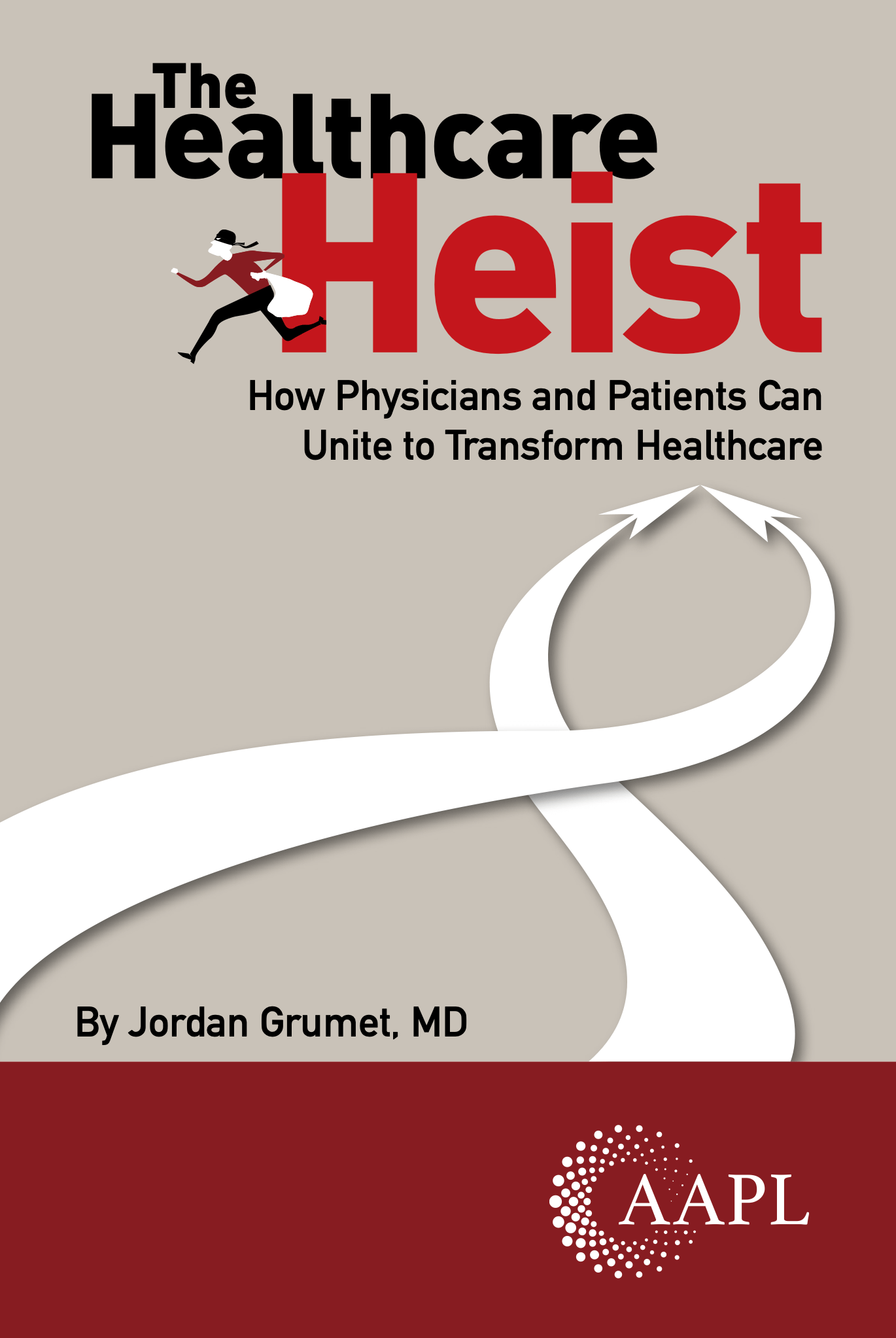
Coming soon! I am happy to announce that I have a new book coming out soon about our healthcare system. Stay tuned!
I agree that many wealth accumulators worry unnecessarily about how much they have and therefore tend to over save, underspend, and work much longer than they need to. But in my experience they aren’t really worried about running out (when it comes down to it most people can live fairly well on social security, after all, especially with a paid off house). They are worried about having to downsize their lifestyle substantially OR of catastrophic event (that causes the same). All the safety nets you mention, from various forms of insurance to government welfare, are notoriously full of holes in America. Needed medical care isn’t covered. Insurance refuses to pay when a house is lost in a storm. These stories aren’t rare - they are in fact very ordinary. Therefore Americans at all wealth levels have much higher levels of financial anxiety than people who live elsewhere - rationally so in many cases.
For me, with any financial decision, the math can be unmistakably compelling without being emotionally convincing.
In other words, the logical side is fully on board, but the emotional side may not be—even if the scales tip firmly toward the logical choice.
I especially liked when you said, “You can start planning not from fear, but from abundance.” Given how you defined abundance in your piece, this reframe can apply whether the stakes are trivial or existential, and is something I can apply in my own situation.