

Purpose anxiety is real. Check out the response to last week’s poll which shows a nearly 60/40 split (click on the image to add your vote):

The problem, however, is that most of us don’t know what to do about this conundrum. We know that purpose is making us feel bad instead of good, and yet have no clue on how to reverse the tide. Part of the problem, in my humble opinion is that we totally misunderstand this slippery phenomenon in the first place. Instead of going into an in depth discussion of why (which I will tackle next week), let’s discuss an illustrative example, a person, who I think many of you are familiar with.
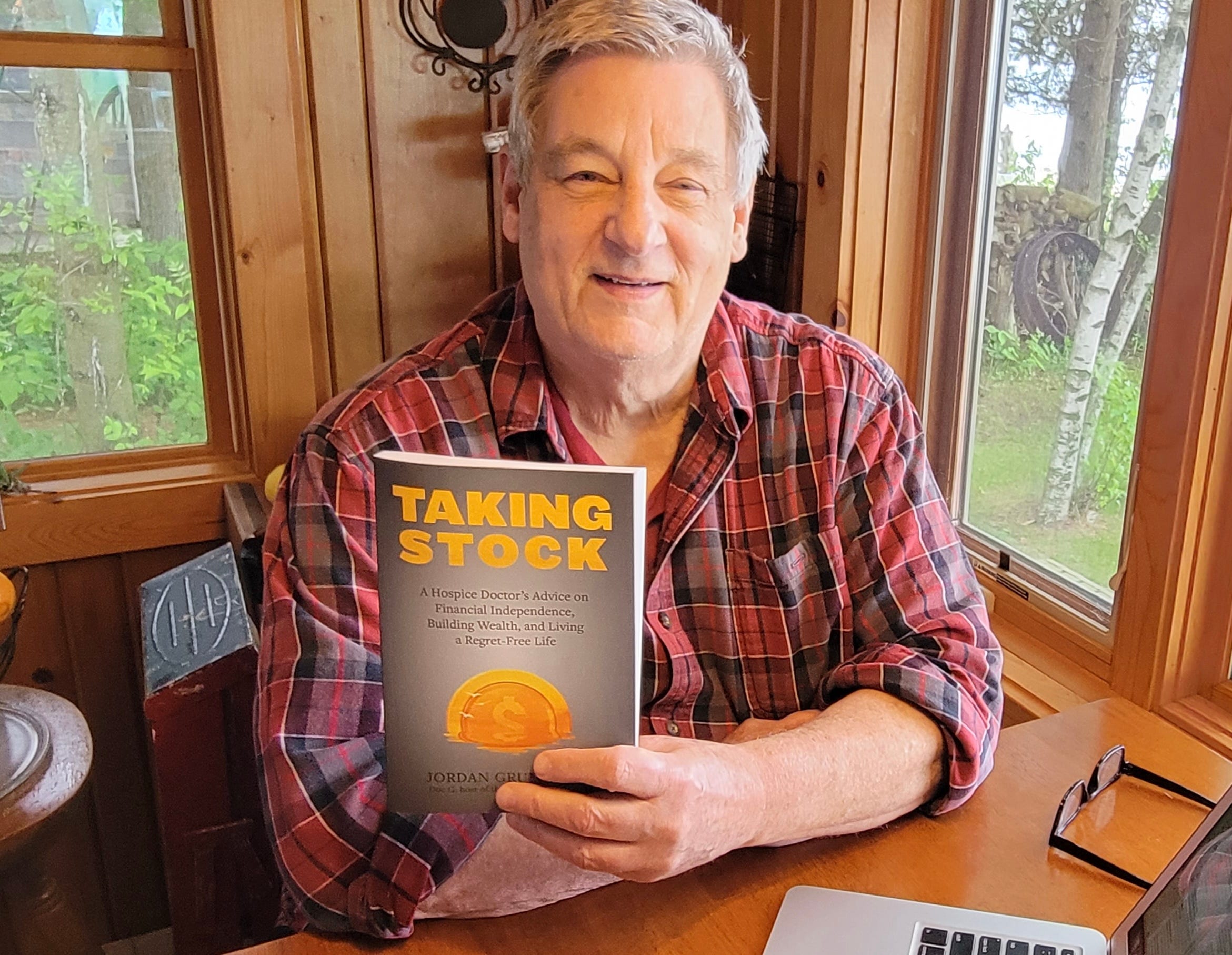
The handsome guy pictured above is my good friend JL Collins. Besides because a successful author and blogger, he also happens to be a great example of someone unabashedly and joyously pursuing a sense of purpose. Yet, as you’ll see in a moment, he kind of came to all of this on accident. Well, not exactly on accident.
You might be thinking to yourself:
“Well lucky him, he found a sense of purpose".”
But I would encourage to think about it slightly differently. He didn’t find his purpose, he created it. Most of this came about long after he had left the work force and settled into his “retirement” life. He had amassed a great deal of knowledge about finances and investing, and fervently wanted to pass on this knowledge to his daughter Jessica.
This desire, to teach his daughter about money, is what I call a purpose anchor. It is the first inkling, or beckoning of something important. But this is the beginning, not the ending of the story. JL then had to find a way to create a life of purpose around this anchor. For him, this started with reading other people’s blogs (Like Mr Money Mustache/Pete Adeney) and eventually starting a blog on his own.
JL never planned on becoming famous, writing a book, nor starting a yearly community get-together (called Chautauqua). His main goal was to teach his daughter. Yet by being authentically engaged in something that felt important and joyful to him, he automatically created a community of people interested in similar topics. Some became his mentors, others his mentees. Some acted as teachers, others as students.
Many of them became good friends.
JL hand no idea the abundance this purpose anchor would produce once he started to create around it. Yet, many of his daily activities, friendships, and future projects have all been shaped by what one could mistake as happenstance.
JL discussing his latest book on the Earn & Invest Podcast (Click to listen)

So what can we learn from JL’s experiences which will help us start to build a life of purpose on our own? Well, here are a few of my takeaways:
You don’t find purpose, you create it around an anchor
Purpose usually starts with something small (teaching his child about money)
Starting small can lead to something bigger (blogs, books, fame) but doesn’t have to
Teaching his child would have been joy and purpose enough, the rest is a happy accident
Community is the pot of gold at the end of the rainbow, not wealth or achievements.
Next week we will jump into the fundamentally different types of purpose and why one causes anxiety and the other leads to health, longevity, and happiness. But before we do, another poll:
This week on The Earn & Invest Podcast (Click to listen)….


Some Facebook Comments related to Monday’s podcast episode about life after financial independence…

When Jolene and I learned about FI in 2019 we went deep into the topic. Prior to that point we had been investing and somewhat frugal in our spending but certainly not focused and intentional in either. Since that point, I feel much more confident and empowered with our finances. This lends to more confidence and comfort in all that I do.
What I didn't expect was finding enjoyment out of spending money. I've never liked letting go of a dollar even when it was for something I value. Now that we are better educated and disciplined with money we spend money much more intentionally on the things we value and cut on those we don't. I now even find happiness when making some purchases such as a meal at a very nice restaurant, a hobby, or booking another trip.
That was a nice catch-up and "where are they now?" They seem to be a lot happier than they used to be and have lightened up on the grim determination of "winning FI". Having children tends to do that.
It does kind of confirm that the actual withdrawal strategy of most FI personalities has nothing to do with yield shields or strategically organized portfolios (they really just have a 60/40 portfolio when you pull off the labels), but is simply "don't spend much money and/or continue to make more money monetizing one or more aspects of life."
I think Go Curry Cracker is the only public FI personality I have seen that implements anything resembling the 4% rule in terms of level of spending. See if you can get them on. Thankfully, they did not take the fear-based advice given to them in 2015 by other FI personalities that they could only expect to be able to spend 3%.
Originally I planned on FIRE as a single. But now I have met my partner and although I am FI, I am willing to postpone the RE so I can help him reach his own FI.