

Let’s take a moment to discuss the decreasing expected utility value of money. What does this mean? Essentially, as you accumulate more wealth, each additional dollar contributes less to your happiness and well-being.
Imagine you have zero dollars. If someone hands you $100, the difference in your life—and likely your happiness—is significant. Moving from $0 to $100 in monthly spending is transformative. But what happens when you’re already spending $1,000 a month, and you increase that to $1,100? The same $100 now has a far smaller impact. The same is true if you’re spending $10,000 a month and raise that to $11,000—it just doesn’t move the needle the way going from zero to $100 does.
The reason is simple: the more money we have, the less it matters to our overall happiness. This seems obvious, but we often forget it. If your net worth is $100 million, gaining another million likely won’t change your life. On the other hand, if your net worth is $100,000, adding a million dollars would be life-changing.
The Personal Finance Debate
So why bring this up? In the personal finance world, debates abound. My friend Joe Saul-Sehy argues that using the "efficient frontier" approach—adding small-cap value and other factors—can yield better returns than simple index investing. His claim? This strategy could mean millions more in retirement savings. He’s supported by voices like Paul Merriman but challenged by heavyweights like J.L. Collins, Rick Ferri, and Karsten Jeske (from Early Retirement Now).

Jeske, in particular, has argued that a small-cap value tilt only pays off if you’ve followed the strategy since before 1980 and held firm through 2024. Start in 1990, and as of now, you’d see no real outperformance compared to the standard S&P 500 or VTSAX index funds.
So, what’s the point?
The Utility of Money vs. the Utility of Purpose
This discussion circles back to the expected utility of money. If you’re financially savvy enough to be debating safe withdrawal rates—whether it’s 3.5% or 5%—you’ve already "made it." The additional spending enabled by a higher withdrawal rate isn’t likely to make you happier.
When you reach a certain financial level, obsessing over marginal gains in spending or investment strategy is often futile. On your deathbed, will it matter whether your net worth hit zero precisely because you spent it all down? Probably not.
If you have millions in the bank, the difference between spending a little more or less is negligible to your happiness. Money, at that point, is just a tool—it’s how you use it and, more importantly, what you’re doing with your life that matters.
Stop Worrying About Money. Start Focusing on Purpose.
Here’s my advice: stop agonizing over whether to follow Merriman or Collins, whether to tilt toward small-cap value, or whether you’re diversified enough. Put your money in an S&P 500 index fund if that feels right for you—and then stop worrying about it.
Instead, focus on something far more important: purpose. Purpose brings happiness, health, and longevity—not the amount of money you spend or save.
What activities fill your time? How do you contribute to the world or your community? What brings you joy and fulfillment? These are the questions that truly matter.
If you want to "move the needle," don’t obsess over your portfolio’s diversification. Save enough, invest wisely, and then channel your energy into creating and living your purpose. Because in the end, purpose—not money—is what makes life worth living.
Final Takeaway
Money can only take you so far. Once it’s a tool and not a necessity, it’s time to stop chasing financial perfection and start chasing what truly matters. Purpose is the ultimate investment—one with returns far greater than any small-cap value tilt can offer.
Today’s Poll
Did you catch this week’s episode of Earn & Invest (Click to listen)?

Join Us In New York City (Click the image below)

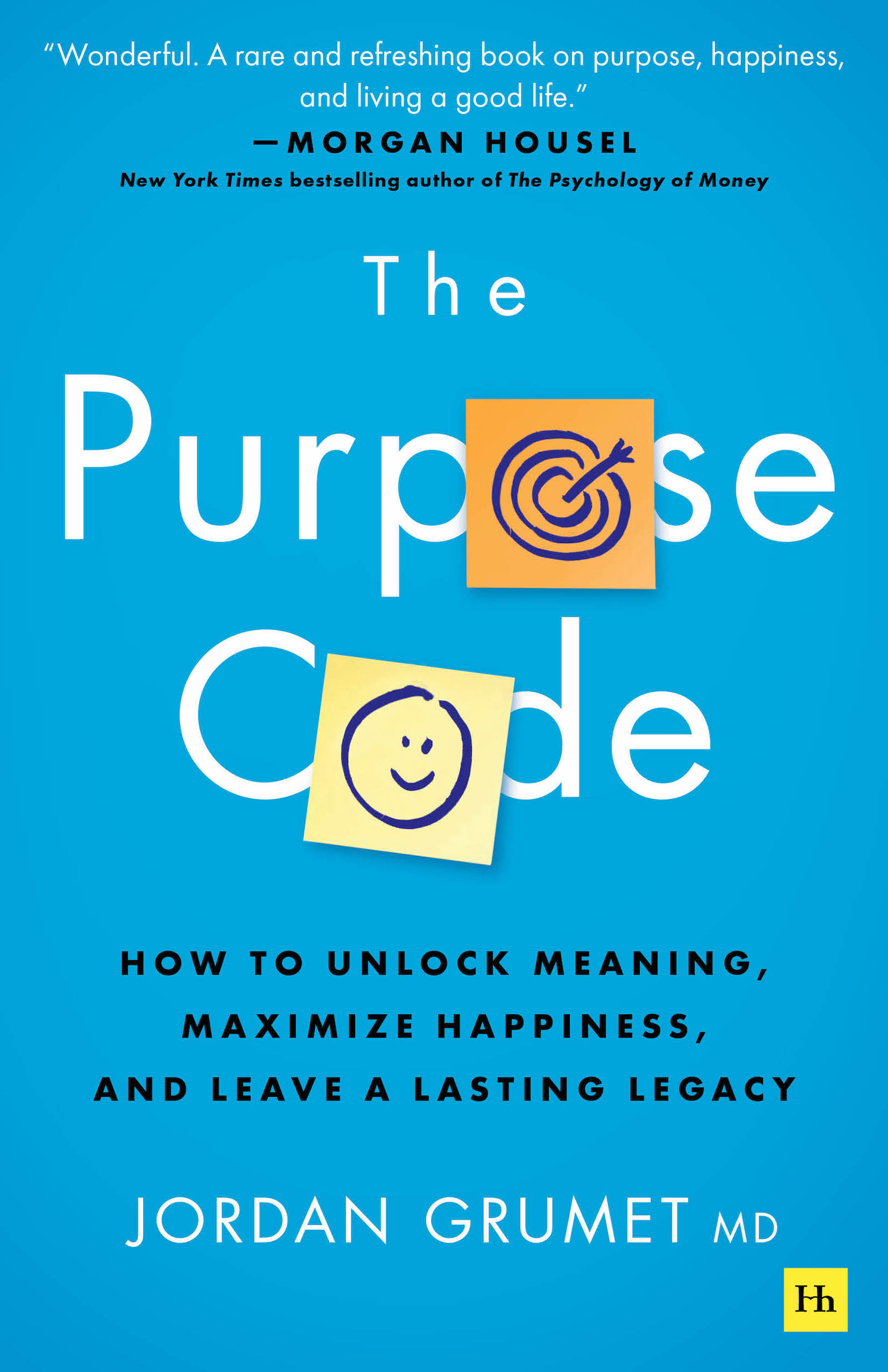
Come join us for a night of celebration and hang out with some of your favorite podcast hosts including Jordan Grumet (Earn & Invest), Joe Saul-Sehy and OG (Stacking Benjamins), Paula Pant (Afford Anything), and Jillian Johnsrud (Retire Often). In addition to joining fellow enthusiasts, you will get an early peak at Jordan's new book, The Purpose Code (available January 7th), as well as hear sometimes hilarious stories from behind the scenes of their shows. Meet us on the mezzanine level of Pianos at 158 Ludlow St, New York, New York. Get ready for an evening filled with good vibes, great company, and of course, amazing insights from the book. Meet the Podcasters, mingle with fellow listeners, and enjoy some refreshments. It's going to be a blast!
Don't miss out on this opportunity to connect with like-minded individuals. Whether you're a long-time fan of the the shows or just curious to learn more, this event is for you. See you there!
The Purpose Code is Now Available on Preorder!
As mentioned in the above episode, get one free hour of coaching with he purchase of 5 or more copies of my new book, The Purpose Code. This offer is limited to the first twenty people, and only in this preorder period! Just send me proof of purchase and we will schedule your session.
This is such a great point, I hadn't thought about it that way.
There's a diminishing return to accumulating more money (beyond what you need), but is there ever a diminishing return to accumulating more purpose? With purpose, it seems like you can just keep going, making life richer and richer.
Spot on! Desiring more when you already have more is an indication of a lack elsewhere - and that is always worth exploring for long term fulfilment